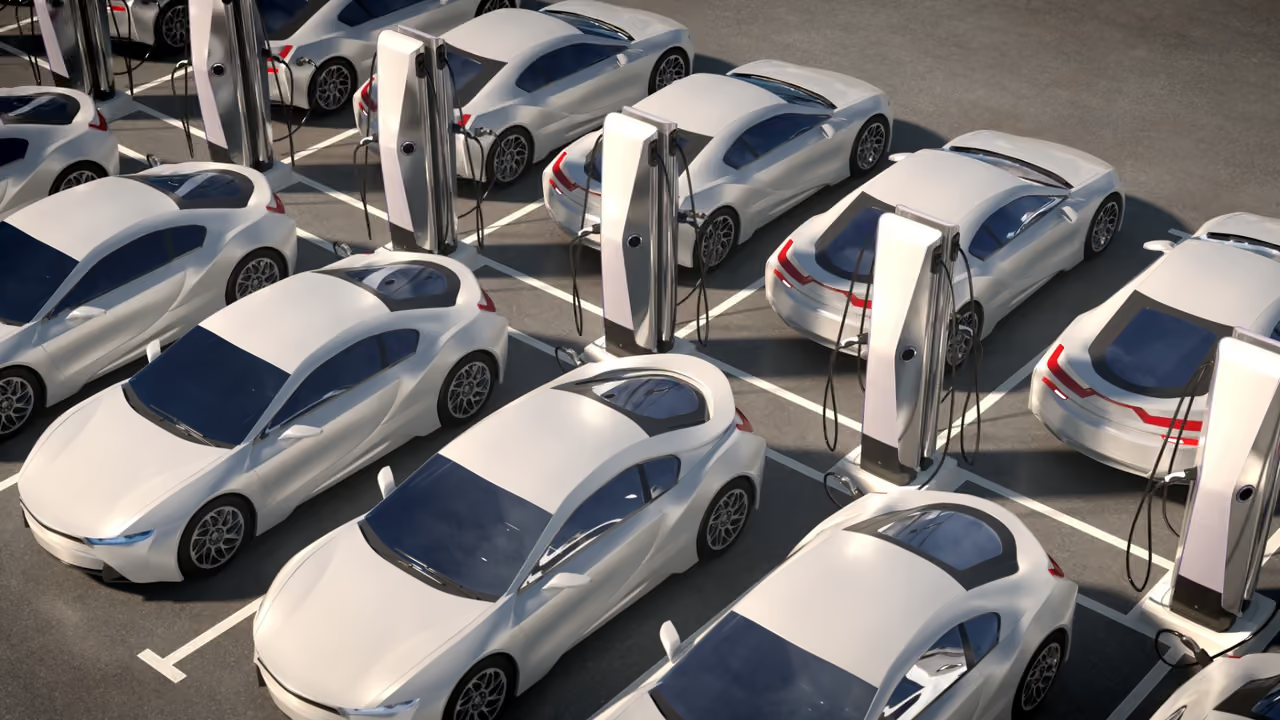
Electric cars have long been celebrated for their advances in battery technology and sustainable energy use, but a quieter revolution is unfolding beneath the surface. It’s not just the hardware—the battery packs and electric motors—that’s driving the next wave of innovation. Instead, software and artificial intelligence are reshaping the way these vehicles perform and interact with drivers, transforming electric cars from mere machines into intelligent companions on the road.
The Shift from Hardware to Software in Electric Vehicles
In the early days of electric vehicles, the focus was clear: extend battery range, improve charging speed, and enhance motor efficiency. While these remain crucial, automakers and tech companies are increasingly channeling resources into software development. The result is a shift from viewing electric cars as purely mechanical devices to recognizing them as sophisticated software platforms.
Unlike traditional cars, which rely heavily on mechanical components, electric vehicles (EVs) incorporate a complex network of sensors, processors, and control units. These elements allow for real-time data processing and adaptive responses. Software updates can now alter vehicle behavior, improve energy management, and unlock new features without changing physical parts. This approach turns the vehicle into a dynamic system that evolves long after it leaves the factory.
AI-driven Personalization Tailoring the Drive to Individual Needs
One of the most exciting applications of AI in electric cars is the ability to learn from the driver and customize the driving experience. Modern EVs collect data on driving habits, preferred routes, climate settings, and even passenger interactions. Using AI algorithms, the vehicle adapts its performance and interface accordingly.
- Adaptive Driving Modes – Instead of preset modes like ‘eco’ or ‘sport,’ AI can blend multiple parameters to create a personalized driving style that balances efficiency and comfort.
- Smart Navigation – AI integrates live traffic data, weather conditions, and previous trip patterns to suggest optimal routes, charging stops, and departure times.
- Voice and Gesture Recognition – Advanced natural language processing and sensor fusion allow for more intuitive control of in-car systems, reducing distraction and enhancing safety.
This level of personalization not only improves comfort but also increases driver confidence and engagement. The car becomes less of a tool and more of a responsive partner.
Predictive Maintenance and Safety Enhancements Enabled by AI
Traditional vehicle maintenance often relies on fixed schedules or reactive repairs. AI is changing this by enabling predictive maintenance that anticipates issues before they become serious problems. By continuously monitoring components such as the battery, brakes, tires, and sensors, AI algorithms analyze patterns and flag anomalies.
For example, if the software detects subtle changes in battery temperature or charge efficiency, it can alert the driver to potential degradation and recommend service. This proactive approach reduces downtime and extends the vehicle’s lifespan.
Safety is another critical area benefiting from AI advancements. Electric cars equipped with AI-driven driver-assistance systems can interpret sensor data to detect hazards faster than human reflexes. Features like automatic emergency braking, lane-keeping assistance, and adaptive cruise control are becoming standard, and their capabilities continue to improve with machine learning.
The Future of Over-the-Air Updates Continuous Improvement for EVs
Over-the-air (OTA) updates have emerged as a game-changer for electric vehicles. Unlike traditional cars that need to visit a service center for software fixes or feature enhancements, EVs can receive updates remotely. This capability is powered by robust software architectures designed to handle secure and seamless updates.
OTA updates serve multiple purposes:
- Bug Fixes and Security Patches – Keeping systems safe from cyber threats and improving stability without inconvenience.
- Feature Additions – Introducing new functionalities such as improved user interfaces, expanded AI capabilities, or enhanced driving modes.
- Performance Optimizations – Refining energy management algorithms and motor control to boost efficiency and range.
Manufacturers are increasingly viewing electric cars as evolving platforms rather than static products. This mindset allows vehicles to improve continuously, adapting to new technologies and user feedback. As AI models grow more sophisticated, OTA updates will enable cars to learn from collective data across fleets, enhancing individual and overall driving experiences.