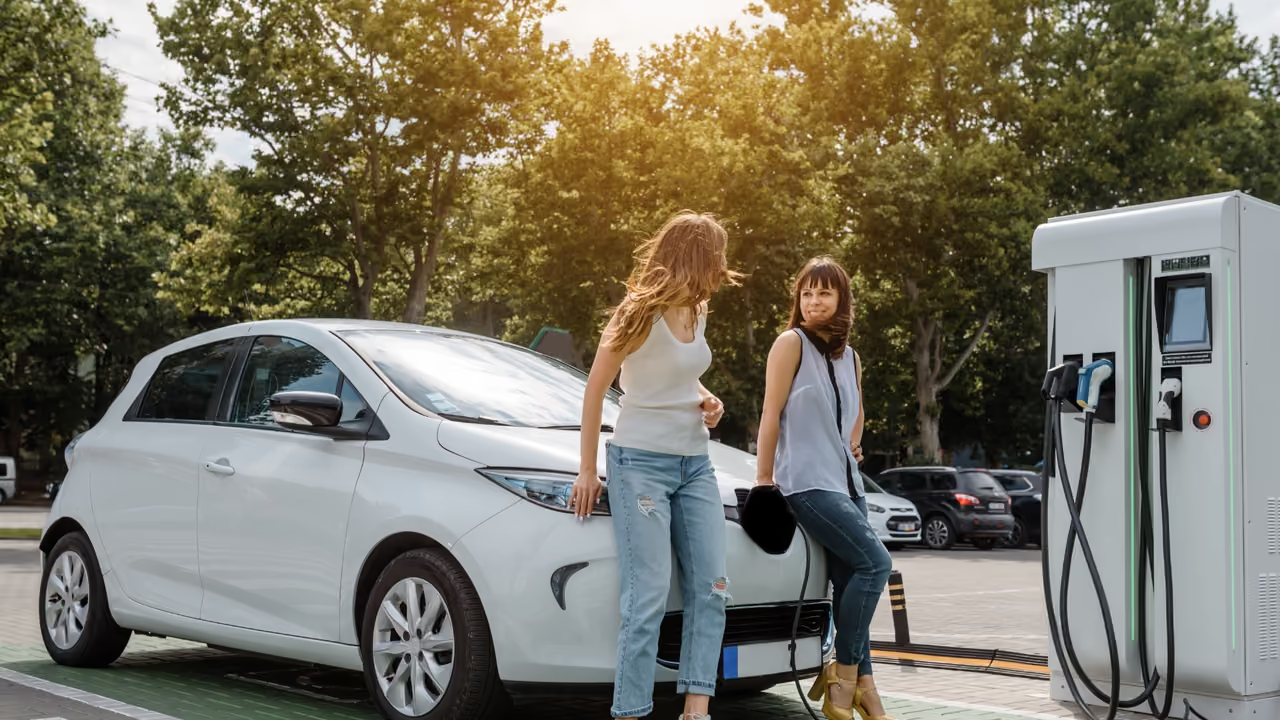
Electric cars have long been hailed as the future of sustainable transportation, but their environmental impact depends heavily on what happens to their batteries once they reach the end of their life. Thanks to rapid advancements in battery recycling technology, electric vehicles (EVs) are becoming more sustainable than ever before, addressing one of the biggest concerns about their ecological footprint.
The Evolution of Battery Recycling Methods
In the early days of electric vehicles, battery recycling was a niche and expensive process, primarily limited to recovering basic metals like lead or cobalt through rudimentary methods. The lithium-ion batteries used in most EVs posed a significant challenge due to their complex chemical makeup and safety risks. Initial recycling efforts were inefficient and yielded low recovery rates, often making the process economically unviable.
Over the past decade, however, the landscape has changed dramatically. Modern recycling methods have shifted from simple mechanical crushing and pyrometallurgical (high-temperature) processes to more sophisticated hydrometallurgical (chemical leaching) and direct recycling techniques. These newer approaches allow for the recovery of a wider range of valuable materials such as lithium, nickel, manganese, and cobalt with much higher purity and less energy consumption.
Mechanical Processing
- Crushing and shredding batteries into smaller pieces
- Sorting materials through magnets and density separation
- Initial recovery of metals but limited in extracting lithium
Pyrometallurgical Recovery
- Smelting shredded battery materials at high temperatures
- Effective for cobalt and nickel but leads to lithium loss
- Energy-intensive and produces emissions
Hydrometallurgical and Direct Recycling
- Using chemical solutions to dissolve and separate metals
- Recovering lithium alongside other metals
- Preserving cathode materials for reuse, reducing processing steps
Challenges Faced in Recycling EV Batteries
Despite technological strides, battery recycling remains a complex endeavor. One major challenge is the design of EV batteries themselves. Many are built to maximize energy density and safety, which can complicate disassembly. The presence of hazardous materials and the risk of thermal runaway demand strict safety protocols, increasing operational costs.
Another obstacle is the lack of standardized battery formats and chemistries. Different manufacturers use varying battery designs, making it difficult to develop a one-size-fits-all recycling process. This fragmentation inhibits scaling up of recycling infrastructure and creates logistical challenges in collecting and processing spent batteries.
Economic viability is another hurdle. The cost of recycling must compete with the price of extracting raw materials from virgin sources. Fluctuations in metal prices affect the profitability of recycling operations, sometimes discouraging investment. However, as battery production surges and raw material scarcity looms, recycling is becoming increasingly indispensable.
Environmental Benefits of Improved Recycling Technologies
Advanced battery recycling technologies bring significant environmental advantages. Recovering valuable metals reduces the need for mining, which is often associated with habitat destruction, water pollution, and high carbon emissions. For example, mining cobalt in certain regions has raised serious ethical and ecological concerns, making recycled sources crucial.
Energy consumption is another key factor. Hydrometallurgical processes use less energy compared to mining and refining new materials, lowering the overall carbon footprint of battery production. Moreover, direct recycling methods that restore cathode materials preserve the battery’s chemical structure, cutting down on energy-intensive synthesis steps.
Recycling also addresses the problem of hazardous waste. Improper disposal of lithium-ion batteries can lead to soil and water contamination. By safely processing these batteries, recycling prevents toxic chemicals from entering ecosystems and reduces the risk of fires in landfills.
Future Outlook Circular Economy in Electric Vehicle Production
The future of electric vehicle production is increasingly intertwined with the concept of a circular economy, where materials are continuously reused rather than discarded. Battery manufacturers, automakers, and recycling firms are collaborating to create closed-loop systems that integrate recycling from the design phase onward.
Innovations such as modular battery packs designed for easier disassembly and second-life applications—where used EV batteries serve as stationary energy storage—are gaining traction. These approaches extend battery lifespans and enhance resource efficiency.
Policy frameworks are also evolving to support this transition. Governments worldwide are implementing regulations that mandate battery recycling, set recovery targets, and provide incentives for sustainable practices. These measures encourage investment in recycling technologies and infrastructure.
As the volume of end-of-life batteries skyrockets in the coming years, the ability to efficiently recycle and reuse battery materials will be a cornerstone of truly sustainable electric transportation. The advancements made today lay the groundwork for a future where electric cars not only reduce emissions on the road but also minimize their environmental impact from cradle to cradle.